
Situation
Caught in the Rain
A soaking from rain is usually low-risk, but how a garment dries afterward matters as much as the rain itself.
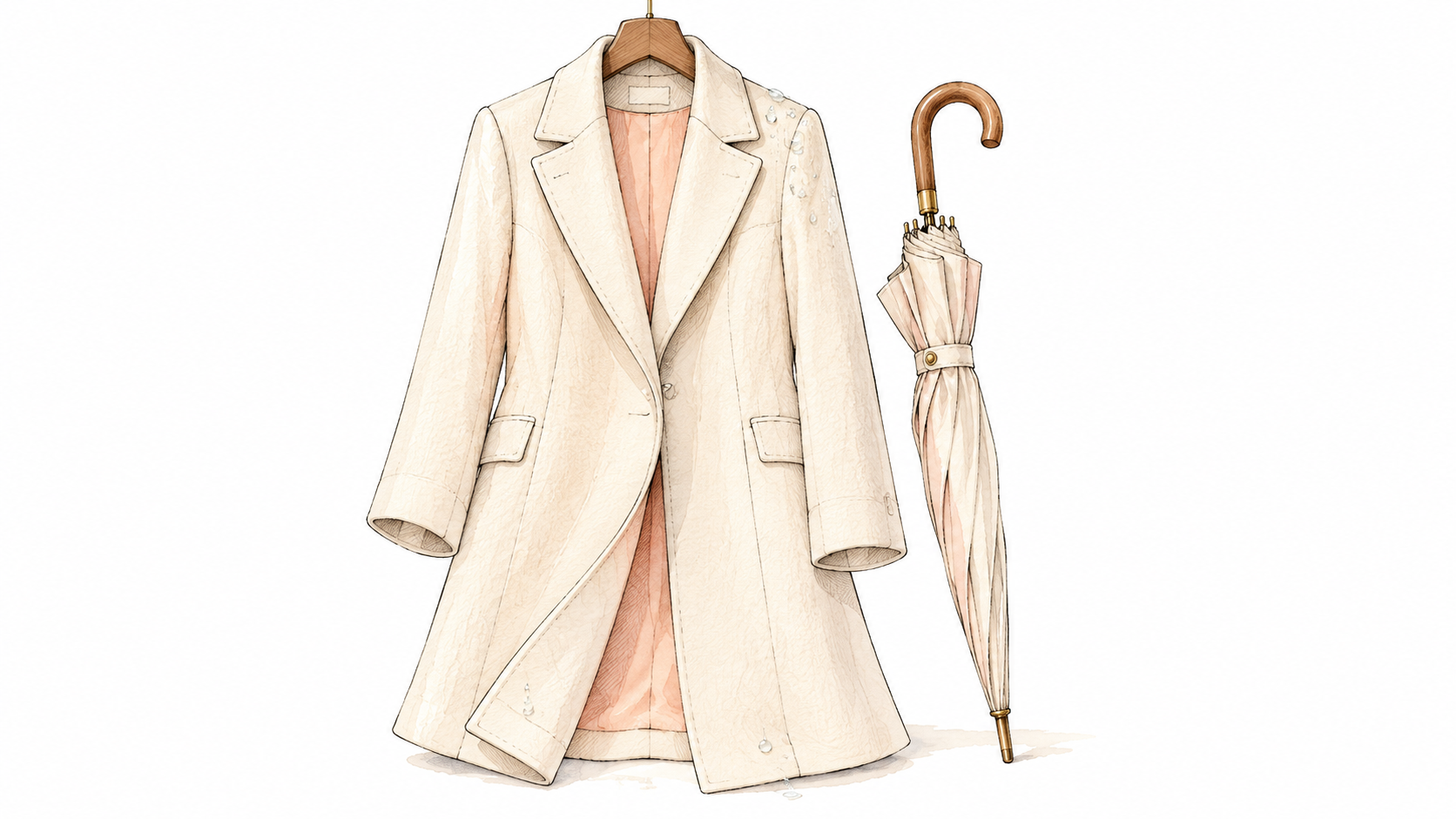
Do this now
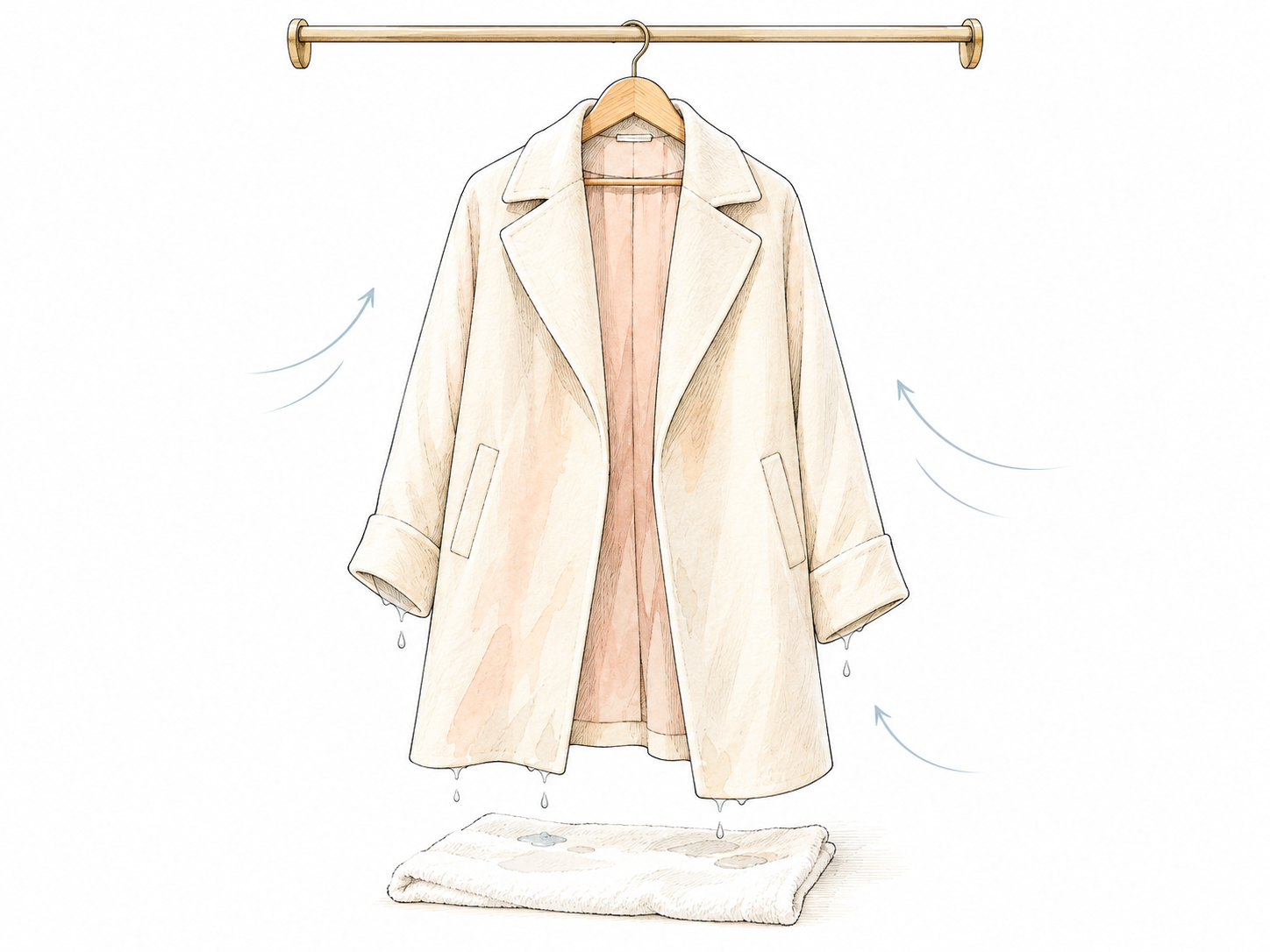
- Let the garment air dry away from direct heat or sunlight, ideally on a padded hanger to hold its shape.
- Blot - do not wring - any excess water out of delicate fabrics like silk or wool.
- Check for watermarks once dry; silk and some finished fabrics can show a faint ring even from clean rainwater.
Technique & Visual Details
Test For
Observe condition or test the fabric before proceeding:
IFLightly damp, washable fabric
THENAir dry flat or on a hanger away from heat - usually no further treatment needed.
IFSoaked silk, suede or structured tailoring
THENBlot gently, reshape while damp, and bring it in if any watermark or stiffness remains once dry.
IFWatermark or ring visible after drying
THENDo not try to re-wet and blend it out at home - bring it in for professional treatment, which can often remove it fully.
Avoid
- ×Do not use a hair dryer or radiator to speed-dry a wet garment - fast, direct heat can shrink wool and distort structured pieces.
- ×Do not wring or twist wet fabric; it stretches knits and can break down delicate weaves.
- ×Do not store a damp garment in a closet or garment bag - closed, damp storage is exactly what invites mildew.
Worth knowing
- Rainwater in cities often carries pollutants that can leave a faint stain or dull a garment's finish as it dries, even though the water itself looks clean.
- Suede and some leather are more sensitive to rain than most fabrics and can water-spot even from a light drizzle.
When to bring it to Rey's
A watermark from rain is one of the more common and most fixable things we see - bring it in rather than trying to blend it out yourself.
Related
This guidance is general and can't guarantee results. Fabrics, dyes and finishes vary; when in doubt, bring the garment in untreated.