
Stain
oil stainSalad Dressing
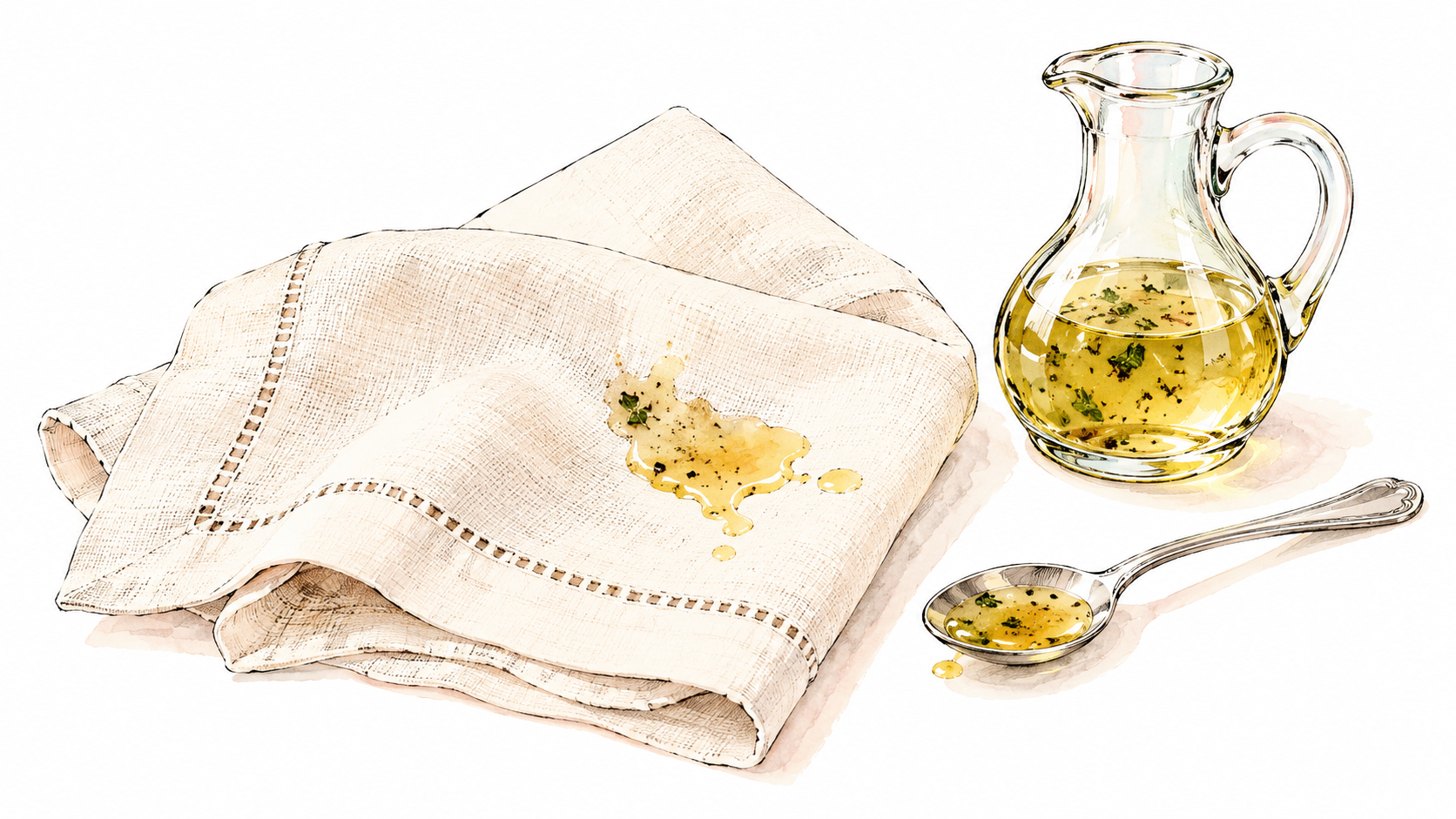
Vinaigrettes and creamy dressings are a true combination stain: oil, acid, and sometimes dairy or egg all in one spill.
Do this now
- Lift any solids off the surface with the edge of a card or spoon before touching the stain itself.
- Blot the surface oil with a dry cloth.
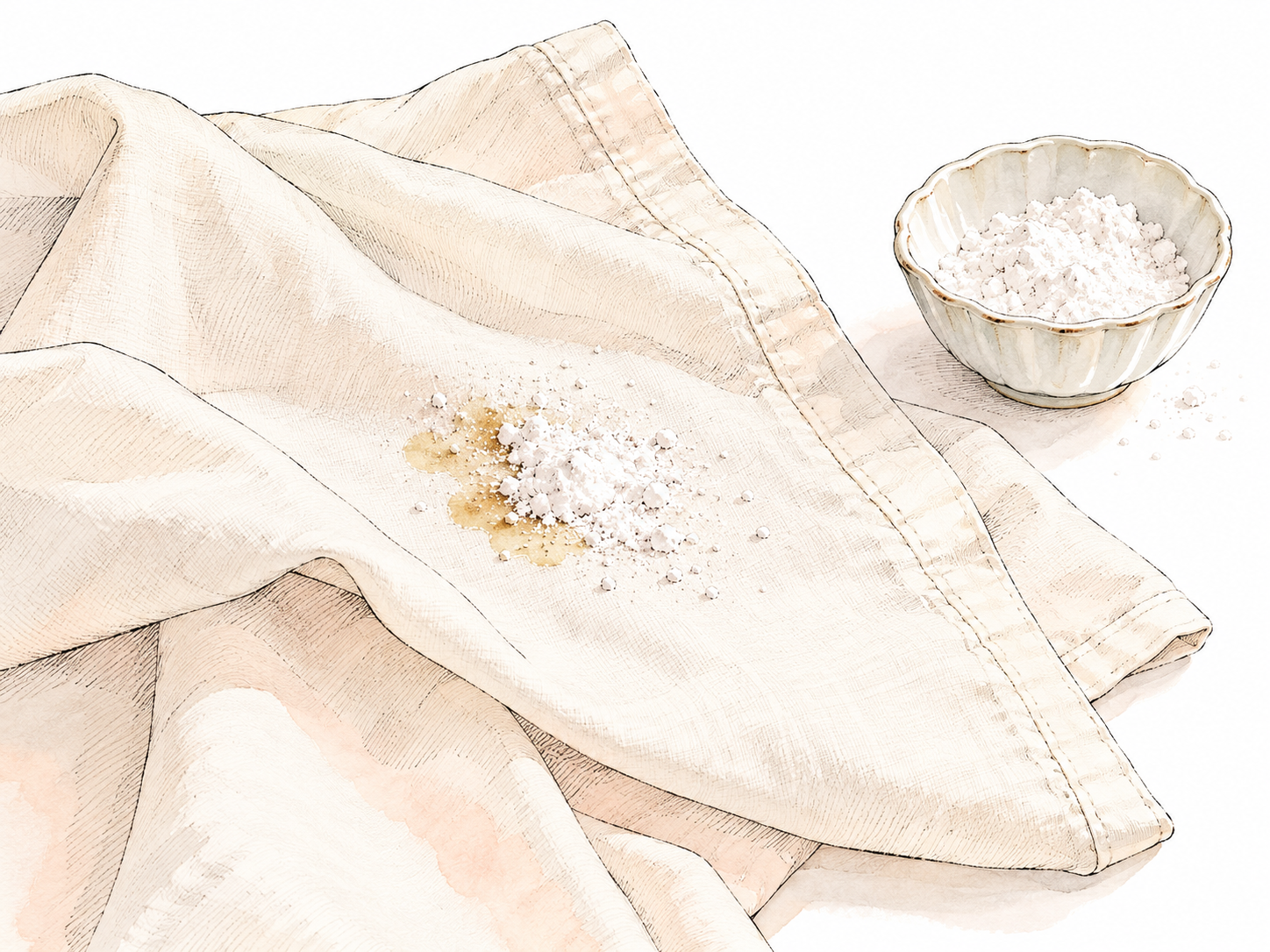
- For a vinaigrette, a light dusting of cornstarch or talc left for 15 to 30 minutes will absorb most of the oil before it sets.
Technique & Visual Details
Test For
Observe condition or test the fabric before proceeding:
IFVinaigrette (oil and vinegar only)
THENAbsorb with cornstarch, brush off, then treat as a standard oil stain.
IFCreamy or cheese-based dressing
THENTreat as a combination stain - blot, absorb the oil, then keep the area cool and bring it in rather than adding water.
IFOn silk or a structured garment
THENBlot only and bring it in. Solvent cleaning is what actually lifts the oil component.
Avoid
- ×Do not rub - it spreads the oil ring wider and pushes the acidic component deeper.
- ×Do not use hot water; it fixes the egg or dairy proteins common in creamy dressings.
- ×Do not apply dish soap directly to silk or suede - it can leave its own ring.
Worth knowing
- Creamy dressings (ranch, caesar, blue cheese) usually contain egg or dairy, making this a protein-plus-oil combination, not a simple oil stain.
- The oil component can turn invisible once dry and reappear days later as a dull yellow shadow - treating it properly now prevents that.
When to bring it to Rey's
Oil-based stains are invisible once dry and easy to miss - point out exactly where the spill happened so we can target it even if you cannot see it anymore.
Related
This guidance is general and can't guarantee results. Fabrics, dyes and finishes vary; when in doubt, bring the garment in untreated.