
Garment
Vintage & Heirloom Garment Restoration
Vintage and heirloom pieces often use fibers, dyes and construction methods no longer common today, which means they need to be assessed before any cleaning - not treated like a modern garment.
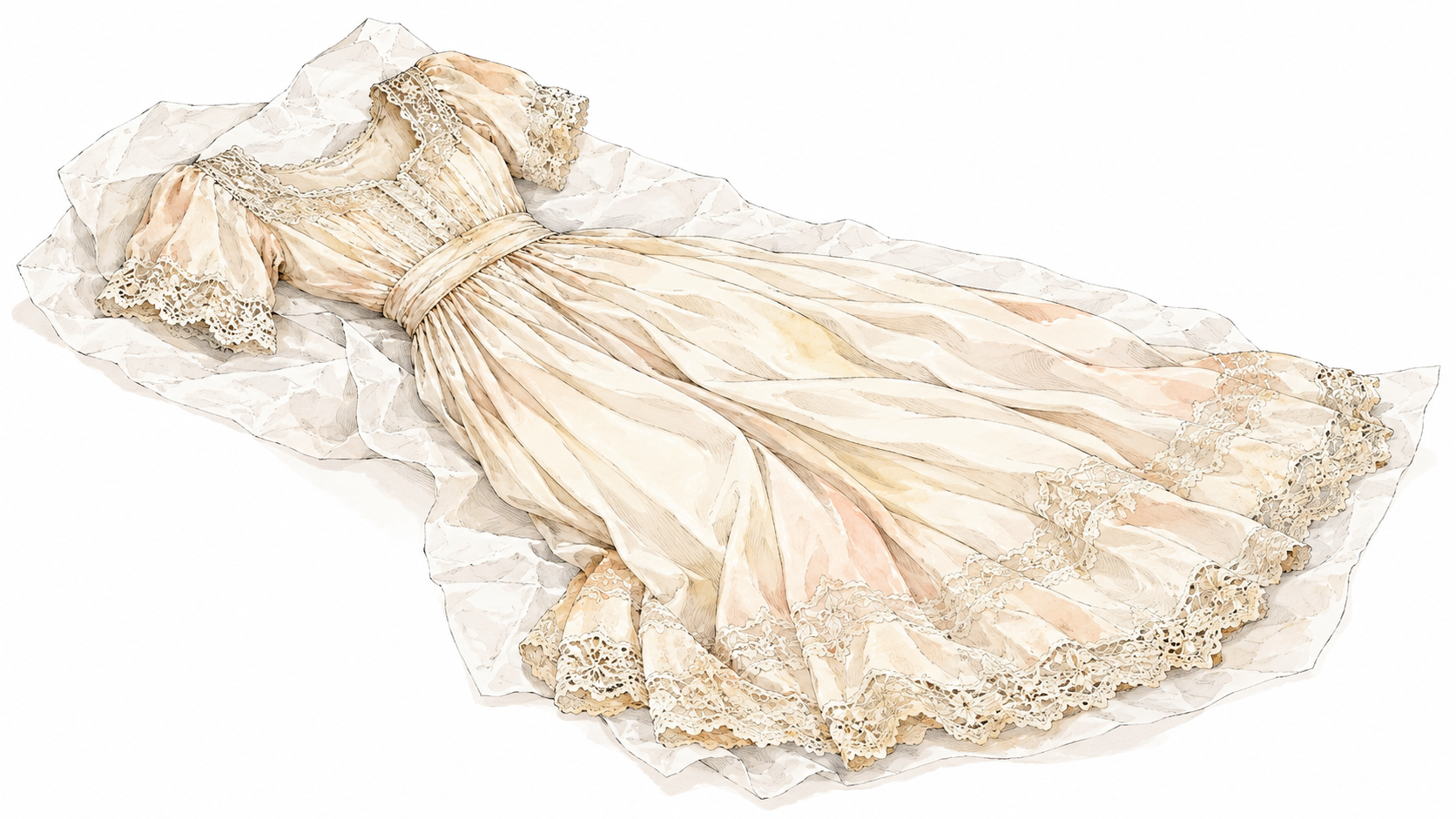
Treat with care. Home treatment can make this worse. Focus on preventing further damage, and let our team take it from here.
Do this now
- Bring vintage pieces in before attempting any cleaning, even a light spot-treatment - older dyes and fibers can react unpredictably to water, heat or standard solvents.
- Tell us anything you know about the garment's age, fiber content, or history - a label, a family story, or an estimated decade all help us choose a safe approach.
- Photograph the garment's current condition before storage or restoration, including any existing damage, tears or discoloration.
Technique & Visual Details
Test For
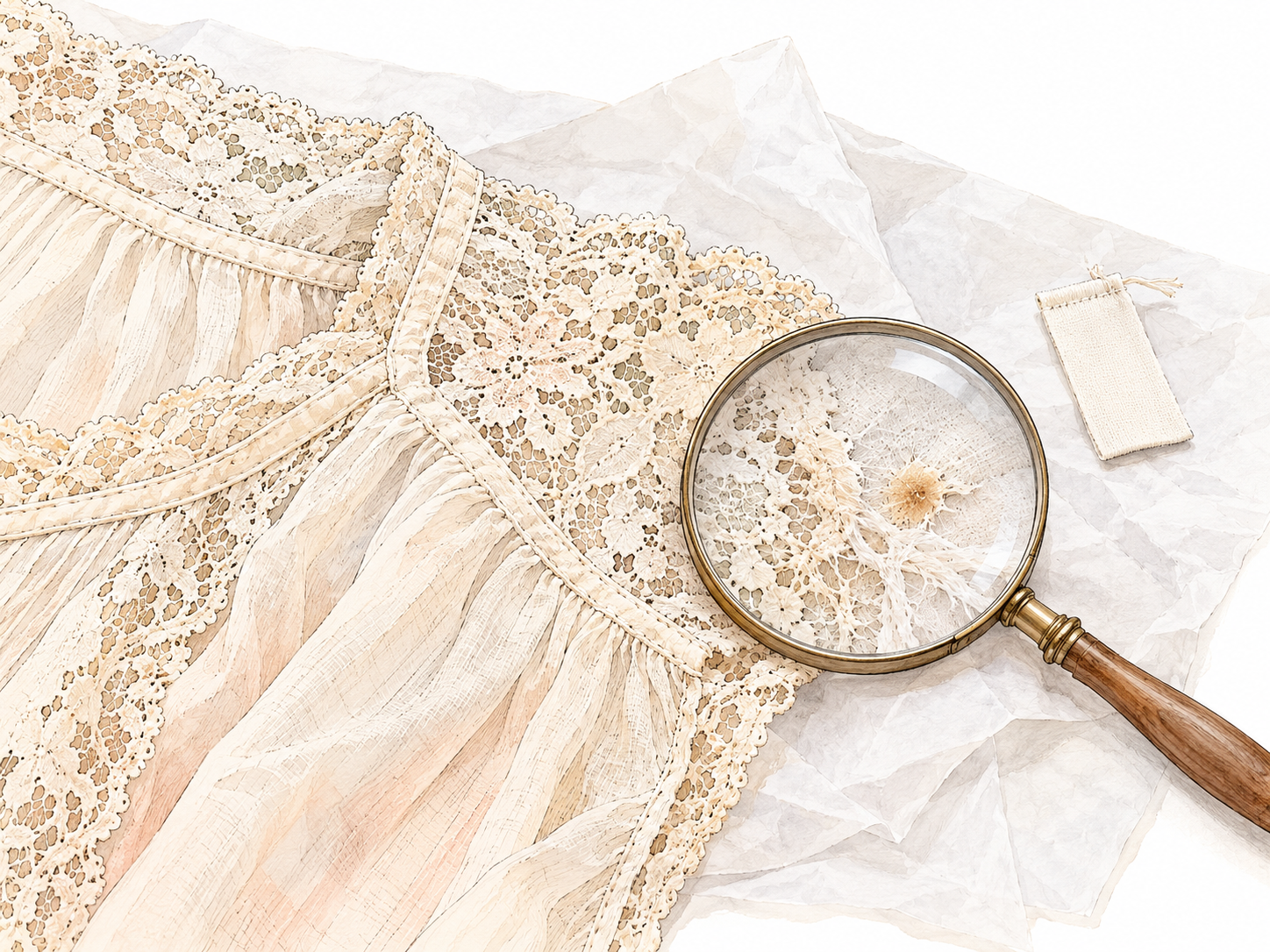
Observe condition or test the fabric before proceeding:
IFUnknown fiber content, no label, or label has faded illegibly
THENBring it in for assessment before any home handling. We can often estimate fiber and era from construction details.
IFVisible existing damage (tears, loose seams, moth holes)
THENDo not attempt repair. Bring it in - stabilizing existing damage before cleaning prevents it from spreading during the process.
IFPiece has sentimental or heirloom value but is not being worn again
THENAsk about archival storage rather than standard dry cleaning - conservation-grade handling differs from routine care.
Avoid
- ×Do not wash, iron, or steam a vintage garment before it has been assessed - some vintage dyes bleed or fade with any moisture, and some fibers (early synthetics, weighted silk) can be damaged by heat that would be perfectly safe on a modern garment.
- ×Do not attempt to repair tears, loose seams, or missing buttons yourself if the piece has sentimental or resale value - a repair with the wrong thread or technique can reduce both.
- ×Do not store vintage garments in plastic dry-cleaning bags long-term; trapped moisture and off-gassing plastic both degrade old fibers faster than open air.
Worth knowing
- Many vintage garments (pre-1970s especially) use fiber blends, structural interfacings and dyes that are no longer manufactured, so there is often no "standard" cleaning method - each piece is assessed individually.
- Weighted silk (common in 1920s-1940s garments) can become brittle and shatter with age; it requires specialized, gentler handling than modern silk.
- Restoration is sometimes a judgment call between full cleaning and conservation - a piece intended for display or archival storage may be treated differently than one intended to be worn again.
When to bring it to Rey's
Vintage and heirloom restoration is assessed piece by piece - bring it in before attempting anything at home, including a simple wash.
Related
This guidance is general and can't guarantee results. Fabrics, dyes and finishes vary; when in doubt, bring the garment in untreated.