Guide
fabric stainCare Label Symbol Decoder & Fabric Identification
The official international care symbol guide: wash tubs, bleaching triangles, drying squares, iron dots, and dry clean circles. Why you should never cut your care labels off.
Do this now
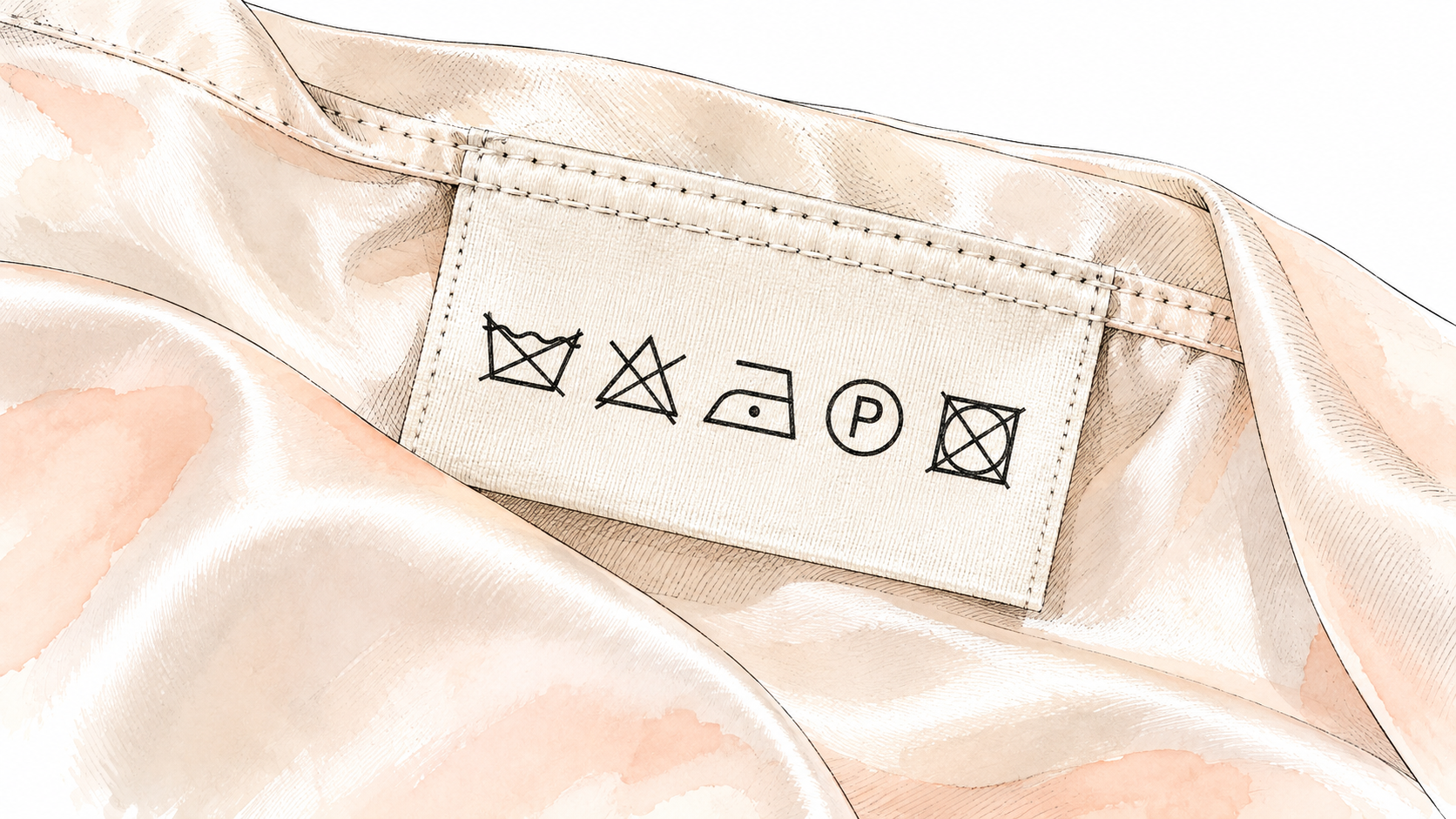
- Read the care label inside the garment before attempting any spot treatment or wash.
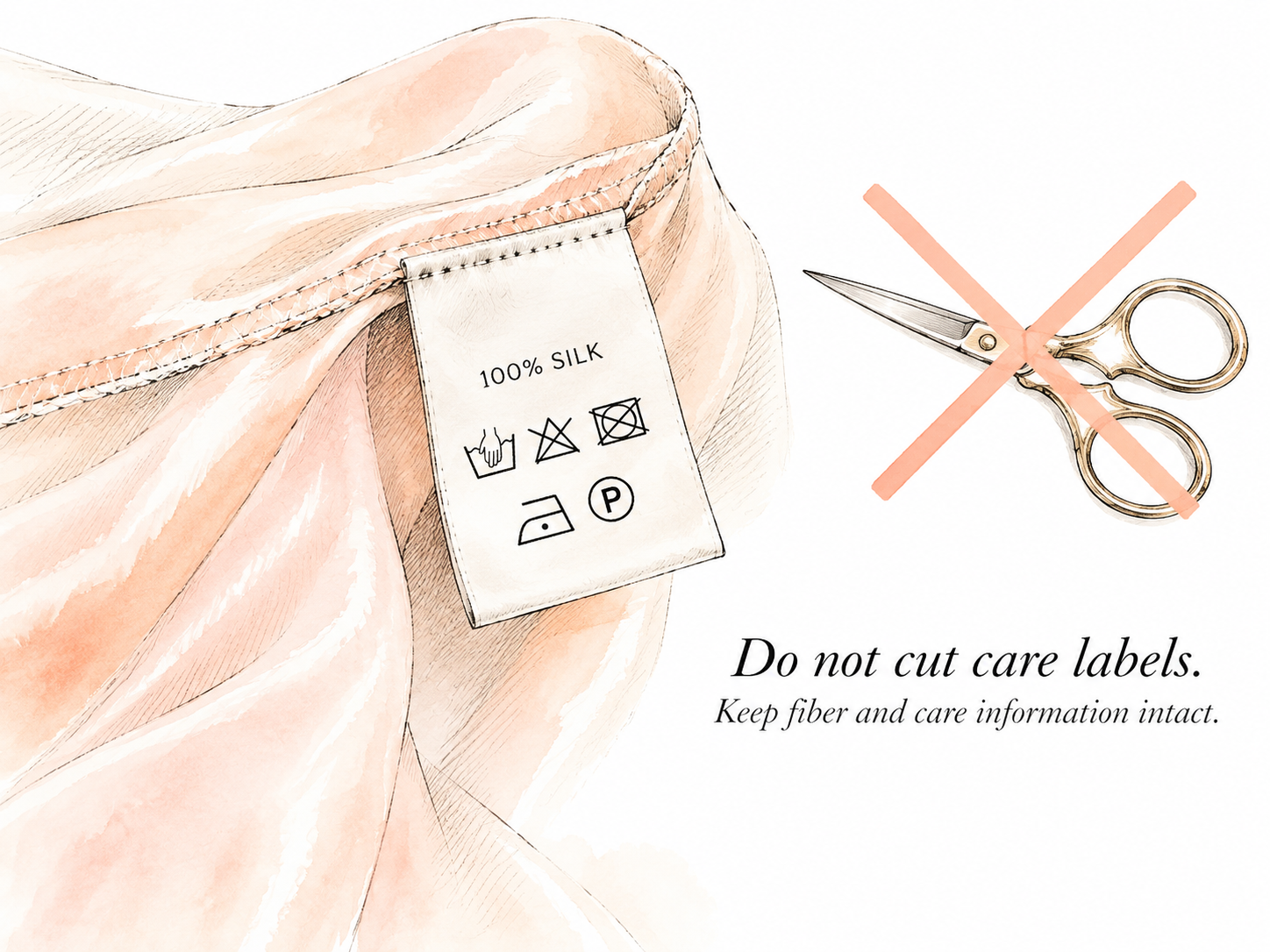
- Never cut care labels off - they preserve essential fiber percentages, RN codes, and safe cleaning methods.
- Look for the circle symbol: an open circle or circle with letters (P, F) indicates professional dry cleaning is required.
- Check the wash tub symbol: a crossed-out tub means water washing is prohibited.
Technique & Visual Details
Test For
Observe condition or test the fabric before proceeding:
IFCare label missing or cut off (Fabric unknown)
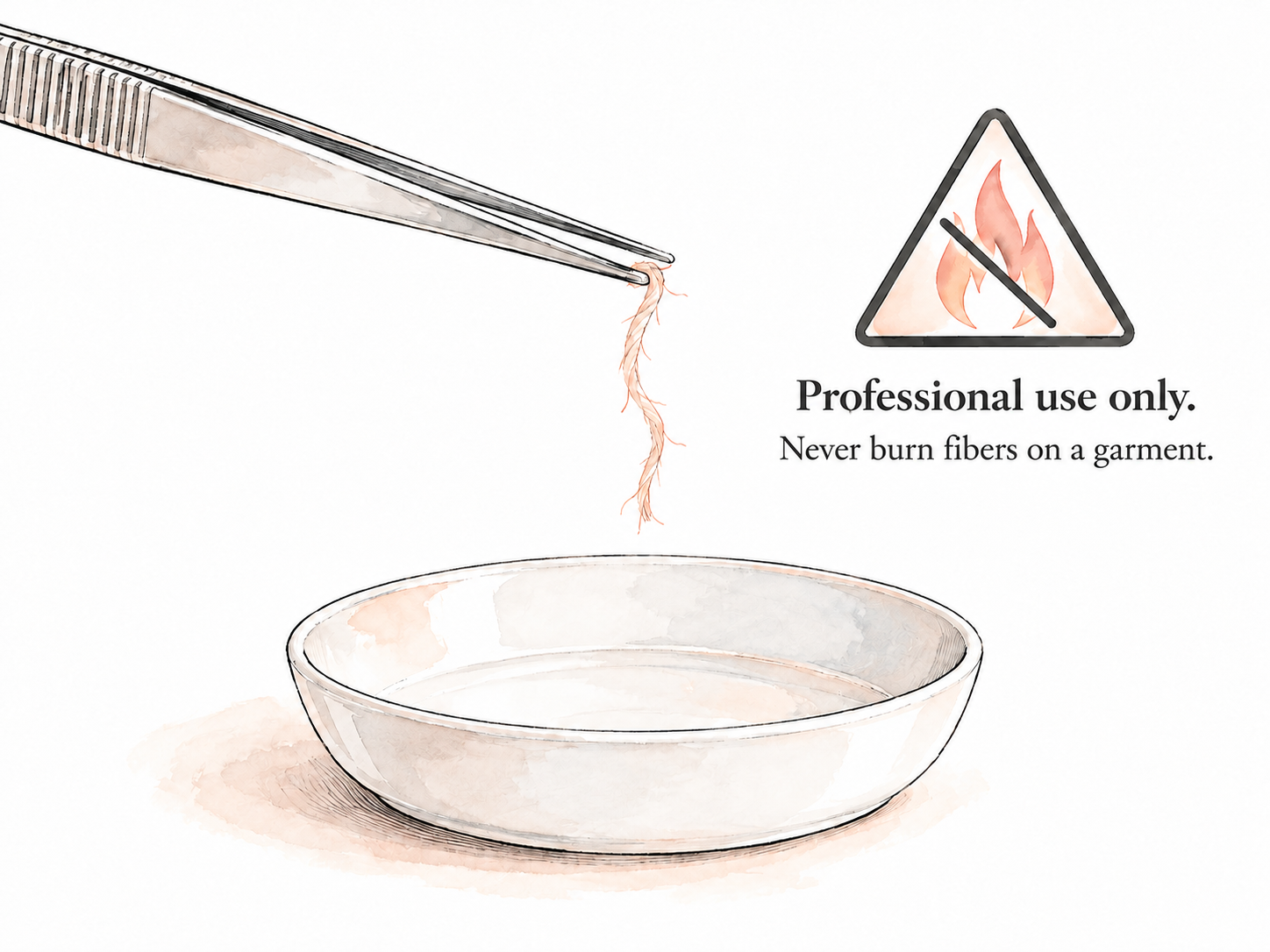
THENIf necessary, perform a burn test ONLY on a tiny loose thread from an interior seam over a ceramic dish with tweezers.
IFBurn test: smells like burning paper/wood with light gray ash
THENIndicates natural plant cellulose (cotton, linen). Safe for cool water spot cleaning.
IFBurn test: smells like burning hair/feathers with crushable bead
THENIndicates animal protein (silk, wool, cashmere). Never use warm water, bleach, or standard detergents.
IFBurn test: sweet chemical smell with hard plastic bead
THENIndicates synthetic fibers (polyester, nylon, acrylic). Avoid high heat and acetone/nail polish remover.
Avoid
- ×Do not cut tags or care labels off high-end garments; doing so turns future care into guesswork and reduces resale value.
- ×Never ignore a 'Dry Clean Only' designation on structured blazers, lined skirts, or silk garments.
- ×Do not attempt fabric burn tests on the body of a garment; burn testing requires extreme caution and a discreet loose thread.
Worth knowing
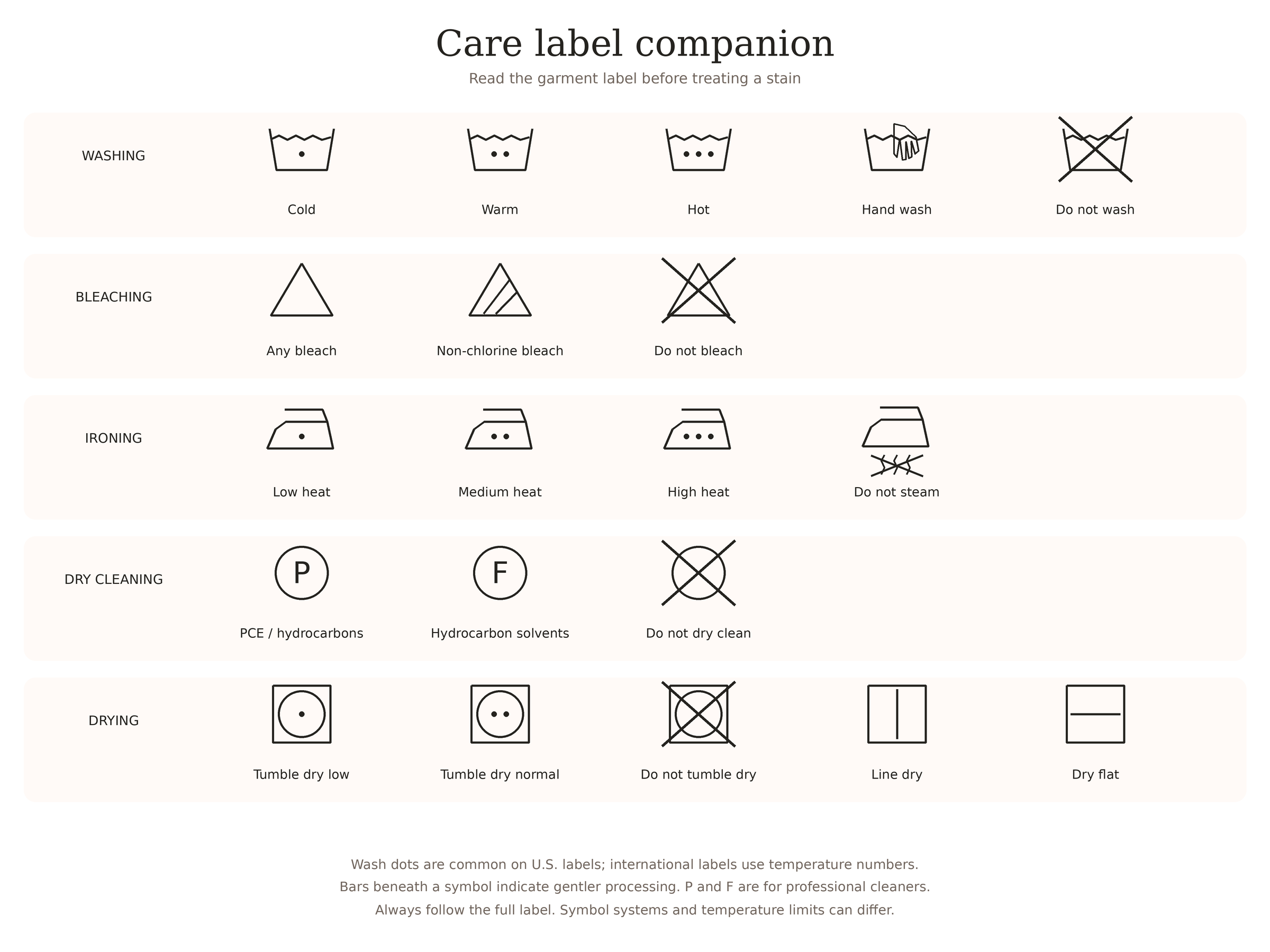
- Dots inside the wash tub or iron indicate temperature: 1 dot is low (30°C / 110°F), 2 dots medium (40°C / 150°F), 3 dots high (50°C+ / 200°F).
- A square with a circle inside represents machine drying; a square with a horizontal line means lay flat to dry (essential for fine knits).
Care labels are a garment's legal passport and instruction manual. Manufacturers test their fabrics, dyes, and interfacings to formulate these exact recommendations.
Why You Must Never Cut Care Labels Off:
1. Fiber Composition: High-end garments often contain multi-fiber blends (e.g., 70% virgin wool, 20% silk, 10% cashmere). Knowing the exact blend dictates which cleaning solvent is safe.
2. Interfacing & Canvasing: A garment may look like sturdy cotton, but its interior collar or waistband may contain heat-sensitive fusible interfacing that bubbles if washed.
3. Resale and Archival Value: Luxury resale houses (The RealReal, Vestiaire Collective) significantly discount garments with removed tags.
Symbol Reference Summary:
• Tub with water: Machine washable. The number of dots indicates maximum water temperature (1 dot = cool, 2 = warm, 3 = hot).
• Tub with hand: Hand wash only in cool water; no machine agitation.
• Tub with an X: Do not wash in water. Requires non-aqueous professional solvent.
• Triangle: Bleaching allowed. Two diagonal stripes = oxygen/non-chlorine bleach only. Solid X over triangle = do not bleach.
• Circle: Professional dry cleaning. A letter 'P' or 'F' indicates the specific solvent family. Circle with an X = do not dry clean.
• Square: Drying rules. Circle inside = tumble dry. Horizontal line = dry flat. Three vertical lines = drip dry.
• Iron: Ironing temperature dots. Crossed-out iron with steam lines below = steam prohibited.
When to bring it to Rey's
Rey's master dry cleaners inspect care labels, verify trim compatibility, and test fabric stability before every cycle.
Related
This guidance is general and can't guarantee results. Fabrics, dyes and finishes vary; when in doubt, bring the garment in untreated.