Guide
combination stainThe Safe At-Home Garment Care Pantry
What supplies are truly safe for at-home garment emergencies, and which internet hacks ruin luxury clothes. Clear dish soap, 3% hydrogen peroxide, and cornstarch demystified.
Do this now
- Keep clean white cotton bar towels or cotton napkins on hand - never use dyed paper towels.
- Use cornstarch or baby powder to gently absorb fresh oil spills on silk, cashmere, and ties.
- Keep 3% hydrogen peroxide for cold protein/blood spot lifting on white washable cottons only.
- Use distilled white vinegar as a gentle acid rinse for neutralizing mineral salts and alkaline residues.
Test For
Observe condition or test the fabric before proceeding:
IFOil drip on silk or fine necktie
THENDo not add water or soap. Dust generously with cornstarch, let sit for 30 minutes, then shake or brush away gently.
IFBlood or organic spot on white washable cotton
THENDab a drop of 3% hydrogen peroxide on the spot using a cotton swab. Flush immediately with cold water.
IFMineral or deodorant buildup on washable shirts
THENMix equal parts distilled white vinegar and cold water to dissolve alkaline aluminum salts before washing.
Avoid
- ×Never use table salt on red wine - salt abrades delicate fibers and fixes tannins permanently.
- ×Never use club soda on silk, wool, or dry-clean-only fabrics - it leaves permanent water halos and rings.
- ×Do not use dishwashing liquid on suede, leather, or raw silk - it strips natural oils and leaves stiff tide marks.
- ×Never use chlorine bleach on wool, silk, spandex, or fine Egyptian cotton.
Worth knowing
- 3% Hydrogen peroxide is light-sensitive; store in its original dark bottle.
- Vinegar is an acid; never apply it to marble dressing counters, travertine, or natural stone surfaces.
Many popular internet laundry hacks cause permanent, irreversible damage to luxury textiles. Here is what belongs in a proper wardrobe care pantry:
Essential Safe Supplies:
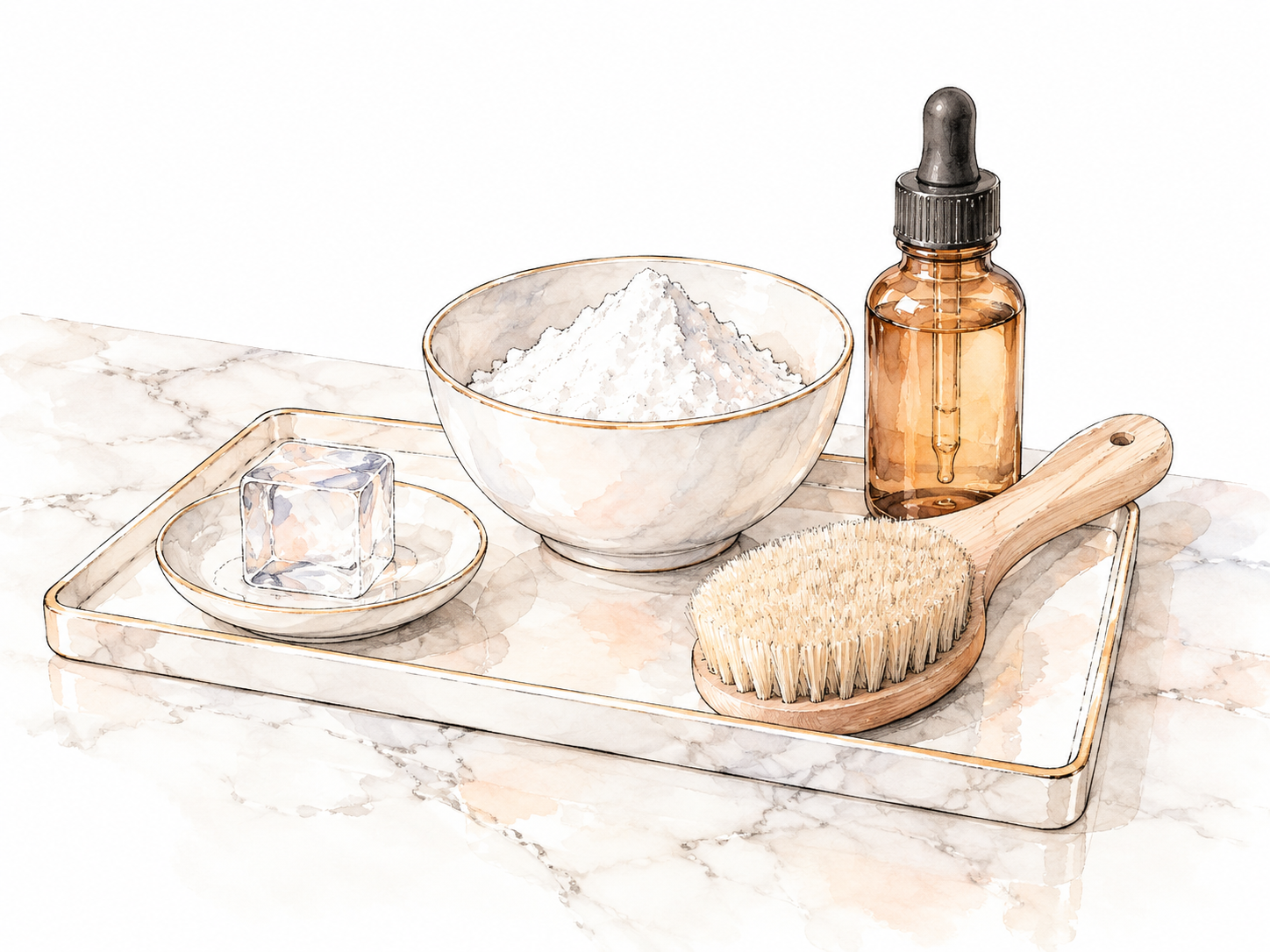
1. Clean White Cotton Towels: Indispensable for blotting without pigment transfer.
2. Cornstarch or Talc: Pure absorbents that draw lipid oils out of delicate yarns without a single drop of liquid.
3. Chilled Water & Ice Cubes: The gentlest, safest universal triage for fresh accidents.
4. Mild, Clear Liquid Dish Soap: One diluted drop is an effective grease surfactant for washable cottons and linens. Avoid colored or scented soaps.
5. 3% Hydrogen Peroxide: A safe, mild oxidizing agent for white plant fibers (cotton, linen). Never use on animal proteins (silk, wool).
6. Distilled White Vinegar: A mild, natural 5% acetic acid solution that breaks down perspiration salts and brightens dull white cottons.
Harmful Hacks to Avoid:
• Salt on Red Wine: Salt dehydrates the liquid, concentrating pigment directly into fiber cores while crystallizing into abrasive shards.
• Club Soda: Club soda contains dissolved carbon dioxide and mineral salts that push red pigments outward, creating larger, permanent water rings on silks.
• Hair Spray on Ink: Modern hairsprays contain polymers, silicones, and oils rather than alcohol, sealing ink into fibers permanently.
When to bring it to Rey's
Rey's maintains medical-grade spotting stations equipped with controlled steam, vacuum tables, and specialized protein/tannin digesters.
Related
This guidance is general and can't guarantee results. Fabrics, dyes and finishes vary; when in doubt, bring the garment in untreated.