
Guide
combination stainThe Master Stain Removal Guide: Triage by Stain Type
How to identify and treat the four fundamental stain groups: Tannin, Protein, Oil & Grease, and Combination stains. The golden rules of blotting, tamping, and water temperature.
Do this now
- Identify the stain type (Tannin, Protein, Oil, or Combination) before applying any water or agent.
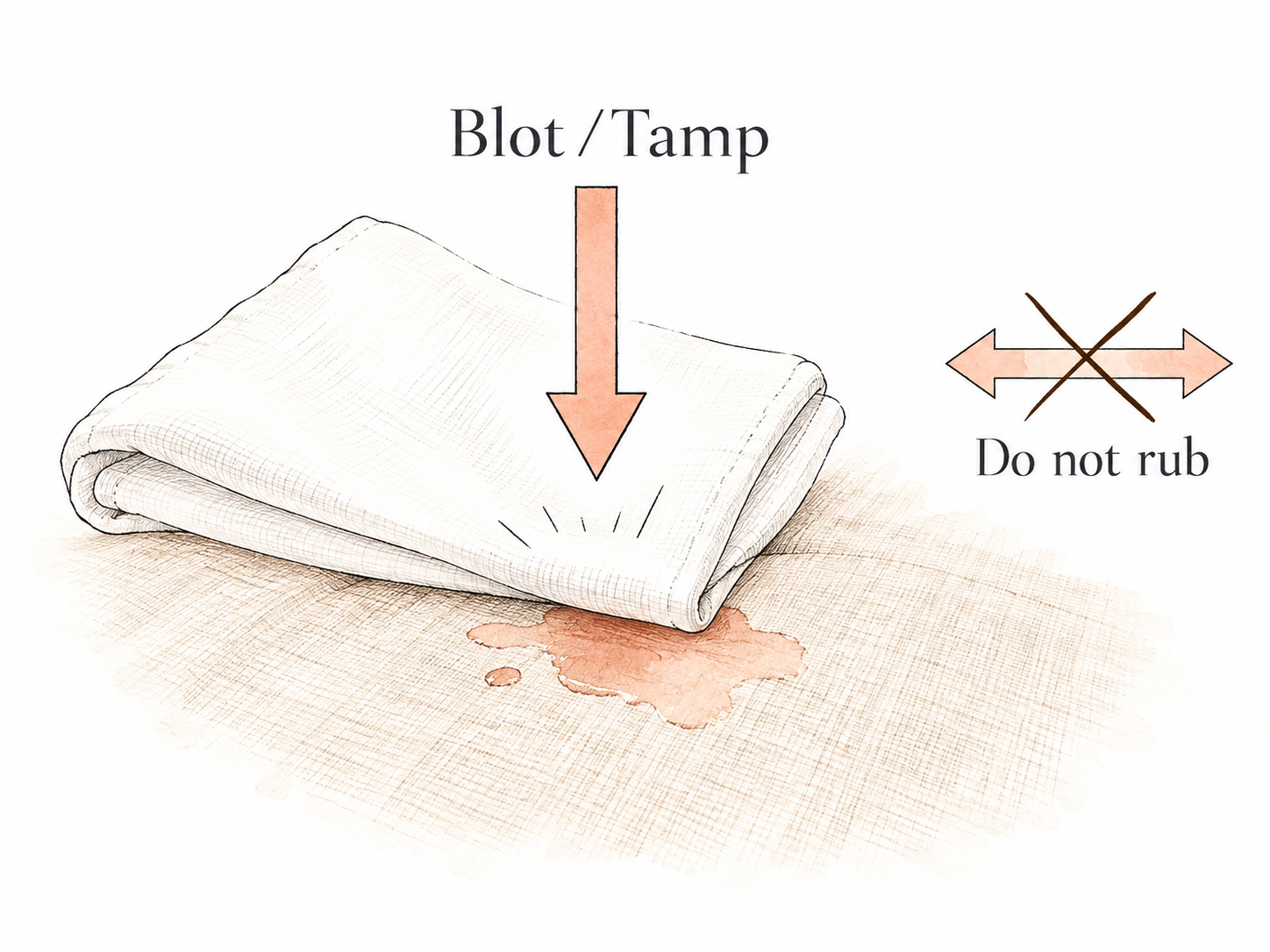
- Blot or tamp gently with a clean white cloth or napkin from the outside inward. Never rub or scrub.
- Check the care label first. If it specifies Dry Clean Only, blot dry and stop.
- Always use cold or lukewarm water first - never apply heat, irons, or hot water.
Technique & Visual Details
Test For
Observe condition or test the fabric before proceeding:
IFFresh spill (within minutes)
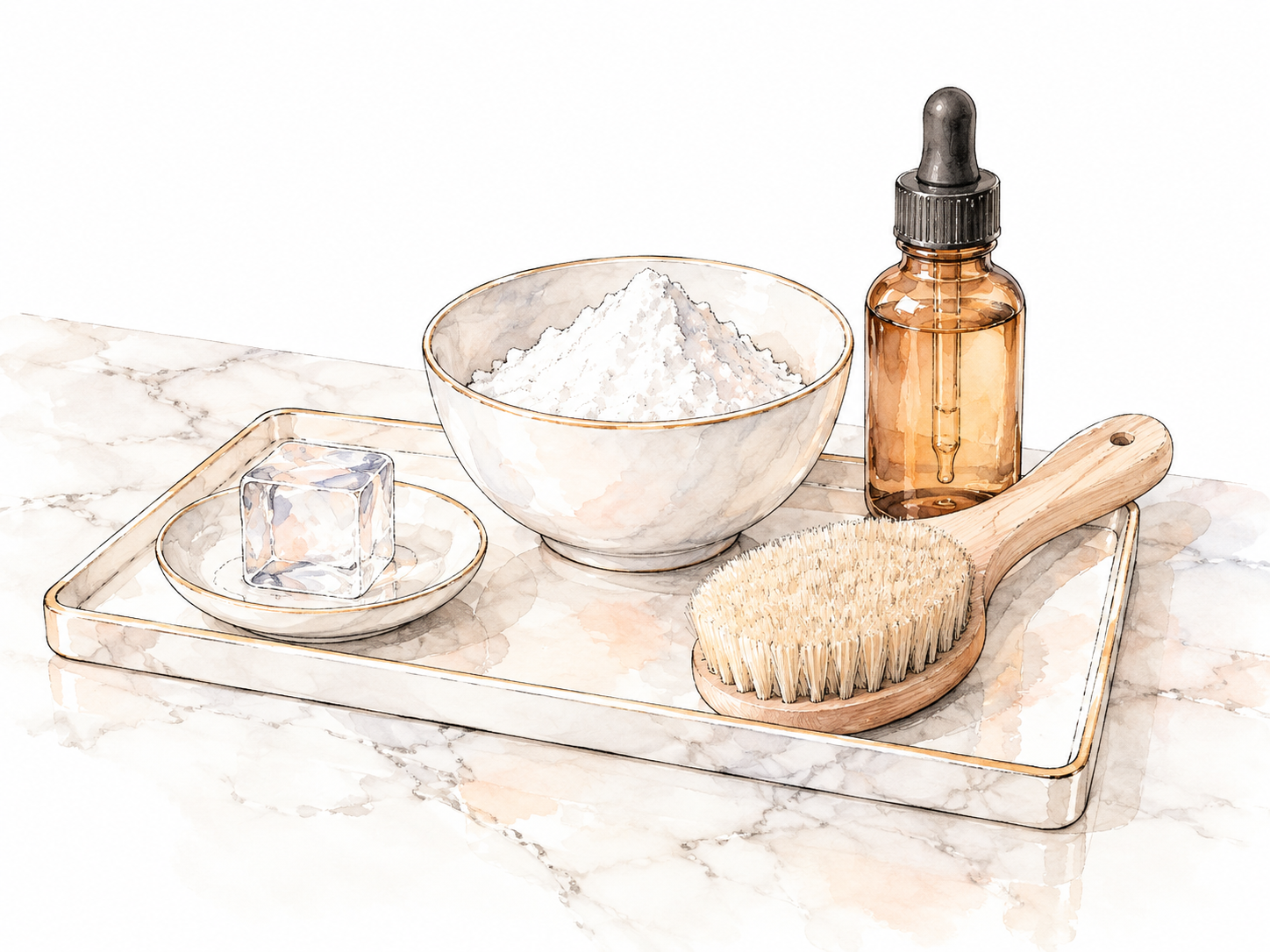
THENTamp vertically with an ice cube wrapped in a clean napkin to cool and lift pigments before bonding.
IFDried, oxidized, or set stain
THENDo not soak repeatedly at home. Bring to Rey's for specialized enzymatic digestion.
IFStain is on delicate silk, wool, or tailoring
THENBlot only with a dry cloth. Adding water creates permanent watermark halos on untreated silk.
Avoid
- ×Never rub or scrub the fabric - scrubbing abrades delicate fibers and drives the stain deeper into the weave.
- ×Never use hot water or a hairdryer; heat permanently cooks protein and caramelizes sugars.
- ×Do not use colored napkins or dyed paper towels - they transfer dye onto the wet garment.
- ×Do not use salt, club soda, or bar soap on fine silks, wools, or cashmeres.
Worth knowing
- Tannins (wine, coffee, berries) need cool water or mild acid; alkaline soaps cause them to turn dark and set.
- Proteins (blood, dairy, eggs) coagulate like cooked eggs when exposed to warm water; use cold water exclusively.
- Oils and Lipids (butter, salad dressing, makeup) repel water; they require an absorbent powder or mild surfactant.
- Combination stains (lattes, gravies, chocolate) require a multi-step sequence: remove solids, absorb oils, then rinse water-based pigments.
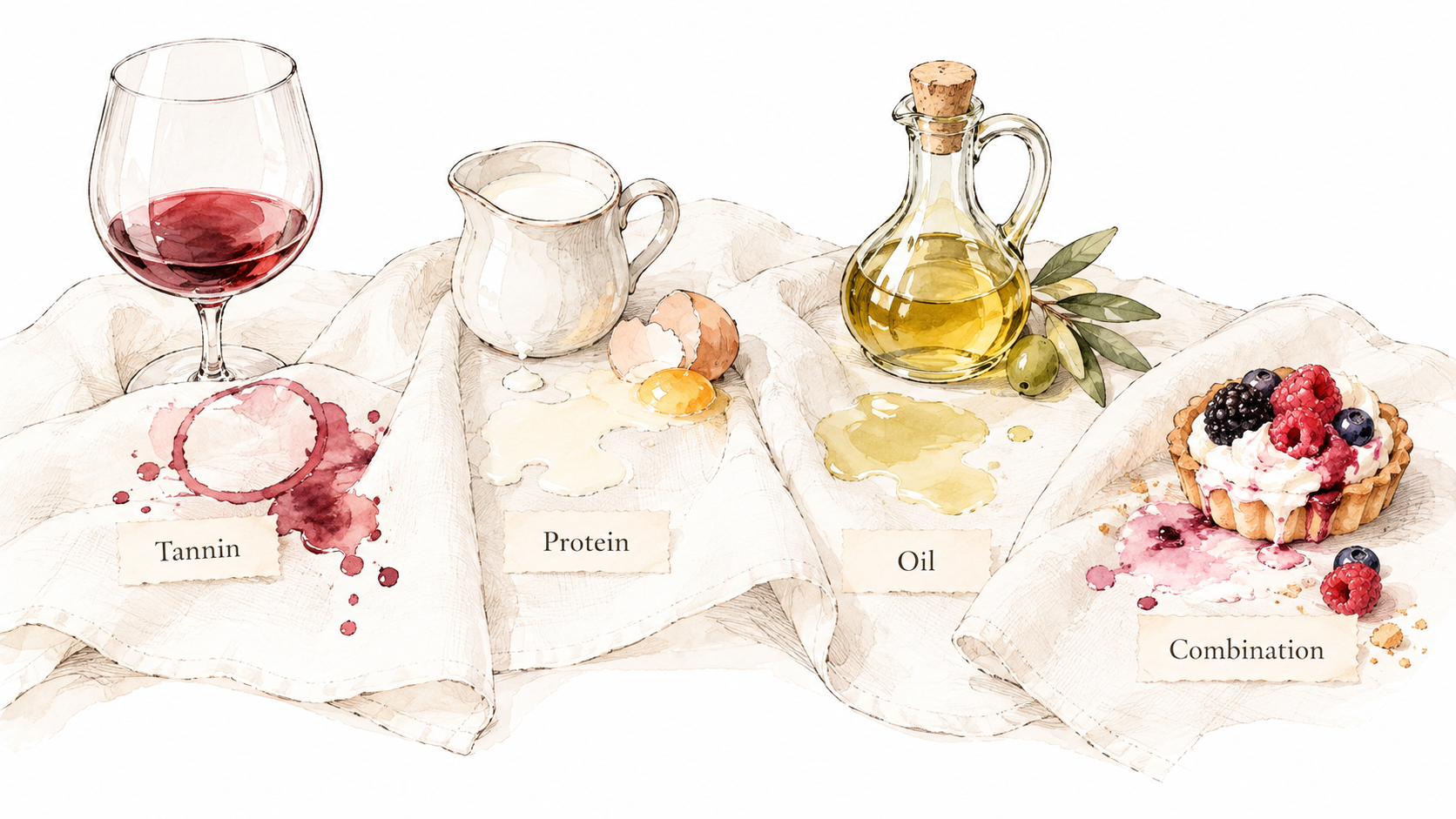
Stain removal is applied chemistry. Every stain belongs to one of four families:
1. Tannin Stains (Plant & Beverage):
Red wine, black coffee, tea, berries, fruit juice, tomato sauce, and perfume. These are acidic, water-soluble pigments. They respond to cold water flushing and mild acid neutralization. Using alkaline bathroom bar soap on a tannin stain creates a chemical reaction that darkens and permanently fixes the mark.
2. Protein Stains (Animal & Body):
Blood, dairy products, egg, meat juices, and perspiration. Proteins coagulate when heated - exactly like an egg frying in a pan. Hot water bonds protein molecules directly into textile fibers. Always flush protein stains with strictly cold water from the reverse side.
3. Oil & Grease Stains (Lipids):
Butter, salad oils, cooking grease, mayonnaise, and cosmetic oils. Because oil is hydrophobic, water alone rolls off and leaves a dark ring. The primary at-home first aid is dry absorption using talc or cornstarch to draw liquid oil out of the yarn capillaries.
4. Combination Stains:
The majority of dinner accidents are combinations: a caffè latte is tannin plus dairy protein; spaghetti bolognese is acidic tomato tannin plus olive oil and meat protein; lipstick is cosmetic wax, oil, and mineral dye. Always treat in proper sequence: lift surface solids first, absorb surface oils, then address water-based pigments.
When to bring it to Rey's
Rey's professional spot-cleaning uses tailored solvent cycles, ultrasonic tamping, and pH-balanced digestion specific to each fiber.
Related
This guidance is general and can't guarantee results. Fabrics, dyes and finishes vary; when in doubt, bring the garment in untreated.